

How the ADA Defines a Service Dog
The Americans with Disabilities Act defines a service animal as a dog that has been individually trained to do work or perform tasks for a person with a disability. That definition appears in the ADA's Title II and Title III regulations, codified at 28 C.F.R. Part 35 and 28 C.F.R. Part 36 respectively.
The phrase "work or perform tasks" carries serious legal weight. The task must be directly connected to the person's disability. A dog that simply provides comfort through its presence does not meet this threshold under the ADA.
Psychiatric conditions are explicitly covered. The Department of Justice confirmed in its regulatory guidance that "mental impairments" fall within the ADA's definition of disability, which includes conditions such as major depressive disorder, bipolar disorder, post-traumatic stress disorder, schizophrenia, anxiety disorders and obsessive-compulsive disorder.
Full Legal Recognition for Psychiatric Service Dogs
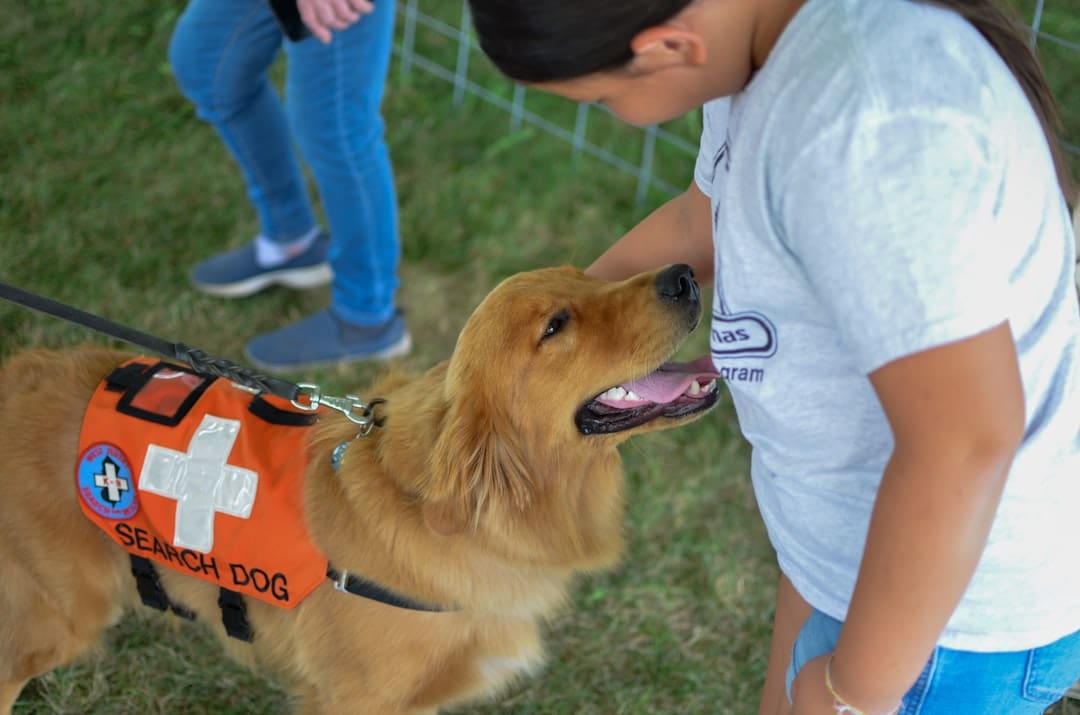
A Psychiatric Service Dog is a fully protected service animal under the ADA. This is not a lesser category. The law does not create tiers of service dogs based on whether the disability is physical or psychiatric.
Some handlers believe their Psychiatric Service Dog receives different treatment than a guide dog or a mobility assistance dog. That belief is incorrect. The ADA applies equally. A business that admits any service dog must admit a Psychiatric Service Dog performing a trained task for a handler with a qualifying psychiatric disability.
The 2011 DOJ rule revisions clarified this point directly. Those revisions, which amended the ADA's Title II and Title III regulations, addressed Psychiatric Service Dogs specifically to end confusion in the field. The DOJ stated that dogs trained to perform tasks for people with psychiatric disabilities qualify as service animals. There is no ambiguity in the federal standard.
At TheraPetic® Healthcare Provider Group, our 501(c)(3) nonprofit mission includes helping individuals with psychiatric disabilities understand and assert their full legal rights. Our Licensed Clinical Doctors have worked with thousands of handlers navigating these protections across housing, public access and travel contexts.
Tasks That Qualify Under the ADA
This is where handlers need the most specific information. The task must be trained, discrete and directly mitigating a symptom or functional limitation caused by the psychiatric disability. Below are task categories and examples that have been recognized in federal regulatory guidance and DOJ published materials.
Interrupting harmful behaviors. A dog trained to interrupt repetitive self-harming behaviors such as skin picking, hair pulling or self-striking performs a qualifying task. The interruption must be trained, meaning the dog actively initiates contact or a specific behavior in response to a learned cue or detected behavior pattern.
Deep pressure therapy during crisis episodes. A dog trained to apply body weight or targeted pressure to a handler during a panic attack, dissociative episode or flashback performs a qualifying task. The dog must be trained to perform this behavior on cue or in response to learned behavioral indicators.
Medication reminders. A dog trained to retrieve medication, alert the handler at a specific time or respond to a device signal as a prompt for medication compliance performs a qualifying task under the ADA's "work" language.
Grounding during dissociation. A dog trained to make physical contact with a handler who is dissociating, guide the handler to a safe location or interrupt a dissociative state through a trained tactile behavior performs a qualifying task directly tied to a psychiatric symptom.
Perimeter checks and room searches. A handler with PTSD who experiences hypervigilance may have a dog trained to systematically search a room before the handler enters. The DOJ has acknowledged this as a qualifying task because it mitigates the functional limitation caused by hypervigilance, not simply the handler's subjective fear.
Blocking and crowd control. A dog trained to position its body between the handler and other people in a crowd, creating a physical buffer in response to a trained cue, performs a qualifying task for a handler whose psychiatric disability causes functional impairment in high-density environments.
Notice the pattern. Each task is specific, trained, observable and tied to a defined symptom or functional limitation. That connection between task and disability is what the ADA requires. You can learn more about how handlers develop and document these tasks through our screening process at service-animal.org.
The Legal Line Between Service Dog and Emotional Support

This distinction matters more than almost any other in the field. The ADA does not protect emotional support animals. It protects service animals. Understanding where one ends and the other begins determines your legal access rights in public spaces.
An emotional support animal provides therapeutic benefit through companionship and its calming presence. That benefit is real. It is clinically meaningful. But it is not a trained task under the ADA's definition.
A Psychiatric Service Dog performs trained tasks that mitigate specific symptoms. The dog is not simply present and comforting. The dog acts in a trained, purposeful way in response to the handler's disability-related need.
The DOJ addressed this directly in its ADA guidance: the work or tasks performed by a service animal must be directly related to the person's disability. The DOJ further stated that the "crime deterrent effects of an animal's presence" and the "emotional support, well-being, comfort, or companionship" an animal provides do not constitute work or tasks under the ADA definition.
For a handler whose dog provides both trained tasks and emotional support, only the trained task component triggers ADA protection. The animal qualifies as a service dog because of its tasks, not its comfort function. Handlers should be precise about this when speaking with businesses or filing complaints.
Our Psychiatric Service Dog resource page walks through the clinical and legal criteria for task development in more detail.
What Businesses Are Required to Do
Title III of the ADA covers places of public accommodation. That includes restaurants, hotels, retail stores, hospitals, gyms, theaters, banks and virtually every business open to the public. Under Title III, covered entities must permit service animals to accompany their handlers in all areas where the public is allowed to go.
A business cannot exclude a Psychiatric Service Dog based on the nature of the handler's disability. They cannot ask the handler to prove the disability is "real enough" to merit a service dog. They cannot require that the service dog's tasks be visible or physically obvious.
Businesses are permitted to ask the dog to leave only if the animal is out of control and the handler does not take effective action to control it, or if the animal is not housebroken. Those are the only two grounds for exclusion under 28 C.F.R. Section 36.302.
A business that refuses access to a Psychiatric Service Dog based on its breed, size or the invisibility of the handler's disability is violating federal law. Handlers in that situation can file a complaint directly with the Department of Justice Civil Rights Division or seek private legal counsel for an ADA Title III claim.
The Two-Question Rule and Its Limits
When a service dog's status is not immediately obvious, a business may ask only two questions. First: is this a service animal required because of a disability? Second: what work or task has the dog been trained to perform?
That is the full extent of permissible inquiry under 28 C.F.R. Section 36.302(c)(6). A business cannot ask about the nature of the disability. They cannot ask the handler to demonstrate the task on command. They cannot require certification, registration or any identification document for the dog.
Handlers should know how to answer the second question clearly and specifically. "It performs deep pressure therapy during panic attacks" is a complete, legally sufficient answer. "It helps with my anxiety" describes an emotional support function and may create confusion. Precision in language protects your access rights.
The two-question rule has a practical limit. If a handler answers both questions affirmatively and the business still denies access, the business is not relying on the two-question process at all. They are simply refusing access, which is a potential Title III violation regardless of what the handler said.
Documentation, Letters, and What They Cannot Demand
Businesses covered by ADA Title III cannot legally require documentation for a Psychiatric Service Dog. No letter from a doctor. No identification card. No vest. No registration with any database. The ADA does not establish a certification or registration system for service animals.
This is one of the most common misunderstandings in the field. Businesses sometimes demand paperwork because they assume that legitimate service dogs come with credentials. That assumption reflects a misreading of the law.
The ADA's framework relies on the two permitted questions and observable behavior, not on paper credentials. A handler is never legally obligated to produce documentation to enter a Title III covered entity with a service dog.
Documentation becomes relevant in different legal contexts. Under the Fair Housing Act, housing providers may request documentation of both the disability and the disability-related need for the animal. That is a separate legal framework from the ADA, with its own standards and procedures. Our Support Animal letter and housing documentation page addresses that process in detail.
For handlers seeking clinical support in developing documentation that is appropriate for their specific legal context, our Licensed Clinical Doctors provide thorough evaluations grounded in DSM-5 criteria and current federal guidance.
Protecting Your Rights as a Handler
Knowing the law is the first step. Enforcing it is the second.
If a business denies access to a Psychiatric Service Dog unlawfully, the handler has several options. Filing a complaint with the DOJ Civil Rights Division is free and does not require an attorney. The DOJ investigates complaints under Title II and Title III and can pursue enforcement actions against violators.
Handlers may also pursue private litigation under ADA Title III. Injunctive relief is the primary remedy available, along with attorney's fees in some circumstances. While Title III does not provide for compensatory damages in most private suits, successful litigation compels the business to change its policies, which creates a real benefit for all handlers.
State law may provide additional remedies. Many states have adopted civil rights statutes that parallel or exceed federal ADA protections and allow for damages that the federal ADA Title III does not.
Handlers should document denied access incidents thoroughly. Record the date, time, location and the name of any staff member involved. Note exactly what was said. Preserve any written communication. That documentation supports both DOJ complaints and potential litigation.
You can start the process of verifying your Psychiatric Service Dog's status and task training through our handler screening process. TheraPetic® Healthcare Provider Group exists to support handlers at every stage of that process, from clinical evaluation through public access confidence.
For direct support, reach our clinical team at help@mypsd.org or call (800) 851-4390. Federal law is on your side. Understanding it in depth is how you make it work for you.
Written By
Ryan Gaughan, BA, CSDT #6202 — Executive Director
TheraPetic® Healthcare Provider Group • About • LinkedIn • ryanjgaughan.com
Clinically Reviewed By
Dr. Patrick Fisher, PhD, NCC, BC-TMH, C-AAIS — Founder & Clinical Director • The Service Animal Expert™
Editorial Review
This article was reviewed by Dr. Patrick Fisher, PhD, NCC, BC-TMH, C-AAIS on July 1, 2026 for accuracy, currency, and clarity. Content is updated when laws or guidance change.