

The ACAA Baseline Every Handler Must Know
The Air Carrier Access Act governs how U.S. airlines treat passengers with disabilities, including those traveling with Service Dogs. Under the Department of Transportation's final rule effective January 2021, airlines are required to transport trained Service Dogs in the cabin at no extra charge. The rule also allows airlines to distinguish between Service Dogs and emotional support animals, a distinction that significantly changed air travel for the latter category.
The DOT defines a Service Dog as a dog trained to do work or perform tasks for the benefit of a person with a disability. That definition aligns with how the Americans with Disabilities Act defines the term on the ground. Airlines may not apply breed restrictions that go beyond what the DOT rule permits, but they can require advance documentation to confirm a dog's training and behavior.
Every carrier discussed below operates within this federal framework. Where they differ is in how they implement it. Knowing the federal floor helps you identify when a carrier is adding requirements beyond what the law demands.
Delta Air Lines: Documentation and Advance Notice
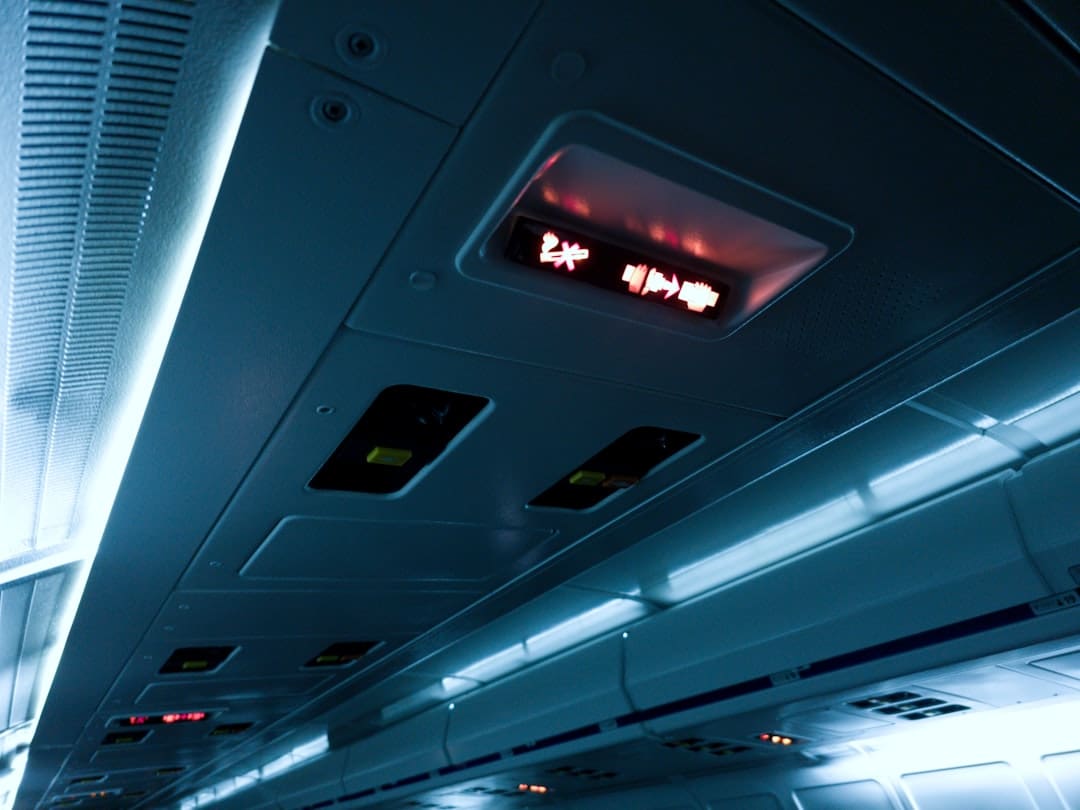
Delta requires passengers traveling with a Service Dog to submit the DOT Service Animal Air Transportation Form at least 48 hours before departure. For flights over eight hours, Delta also requires the DOT Service Animal Relief Attestation form, which confirms the dog can relieve itself in a sanitary manner or will not need to relieve itself during the flight. Both forms are available on Delta's accessibility page and must be submitted through Delta's dedicated accessibility desk.
Delta does not publish a breed ban for Service Dogs. Their published policy states that any dog of any breed may travel as a Service Dog if the handler submits the required DOT forms and the dog meets behavioral standards. The dog must sit at or under the passenger's feet and may not occupy a separate seat or block the aisle.
One area where Delta stands out is their dedicated accessibility support team. Handlers can call or submit documentation online well in advance. Delta also accepts walk-up submissions at the airport, though submitting ahead of time reduces the chance of any last-minute friction at the gate.
Delta's policy toward emotional support animals changed significantly after the 2021 DOT rule. Delta no longer accepts emotional support animals as a distinct category. If your dog does not meet the DOT definition of a trained Service Dog, Delta will treat it as a pet subject to pet carrier fees and cabin restrictions.
United Airlines: Forms, Breeds, and Cabin Rules
United Airlines follows the DOT rule closely and requires the same two federal forms that Delta requires. United's advance notice window is also 48 hours before departure. For international flights, United encourages submission even earlier due to destination-country requirements that go beyond U.S. law.
United's published policy states that Service Dogs must be harnessed, leashed or tethered, and under control at all times. The dog must fit within the handler's foot space without extending into the aisle or neighboring seat. United does not publish a breed restriction list for Service Dogs. Their policy focuses on behavior rather than breed, consistent with the DOT framework.
United's MileagePlus accessibility desk is the primary contact point for submitting documentation before a flight. Handlers who have already submitted forms for a previous United flight will need to resubmit for each new trip. United does not maintain a permanent profile for verified Service Dog handlers, which can feel redundant to frequent flyers.
One important note for handlers flying United with a larger dog: United gate agents have discretion to assess whether a dog can be safely accommodated in the cabin based on the specific aircraft assigned to that route. Smaller regional jets used on short-haul routes have less floor space. Knowing your aircraft type before arriving at the gate is a practical step that saves stress.
American Airlines: What Sets Their Process Apart
American Airlines requires the DOT Service Animal Air Transportation Form submitted at least 48 hours before departure. American also specifically notes that Service Dogs must be trained to perform a task directly related to the handler's disability. That language mirrors the DOT rule and the Americans with Disabilities Act, and it signals that American may ask clarifying questions if a dog's function is not apparent.
American does not maintain a published breed ban for Service Dogs. Their policy requires that the dog remain on the floor under the seat in front of the handler or in the handler's foot space. American gate agents are trained to assess whether the dog poses a direct threat to the health or safety of others, a standard borrowed directly from the ADA's direct threat analysis.
For handlers with psychiatric disabilities specifically, American treats Psychiatric Service Dogs under the same framework as other Service Dogs. The dog must be trained to perform a task, not simply provide comfort or emotional support. Our guide to Psychiatric Service Dog documentation explains how to demonstrate task training in writing, which is useful when completing the DOT forms.
American's Special Assistance line is the best contact point for pre-flight coordination. Handlers flying with large dogs should call ahead and ask about the specific aircraft assigned to their route. American operates a mix of narrow-body and wide-body aircraft, and cabin floor dimensions vary accordingly.
Southwest Airlines: The Simplest Major Carrier Policy
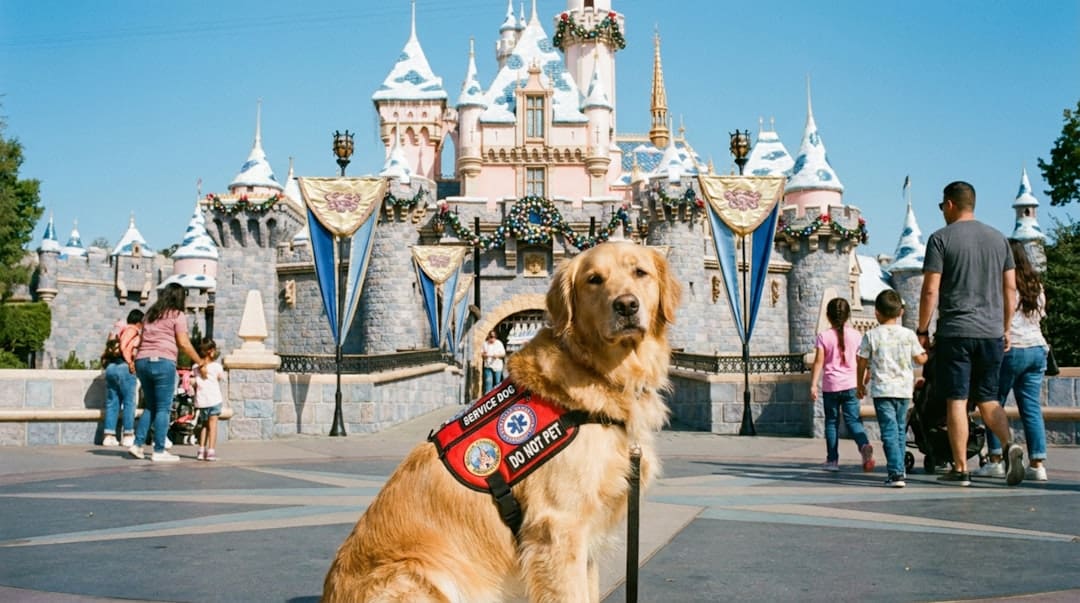
Southwest has earned a reputation among handlers for having a relatively streamlined Service Dog process. Southwest requires the DOT Service Animal Air Transportation Form, just like every other major carrier. Southwest's advance notice window is 48 hours before departure, consistent with the DOT's own recommended practice.
Southwest does not publish a breed restriction list. Their policy focuses on behavior and the dog's ability to fit in the handler's foot space without encroaching on adjacent seating or aisles. Southwest flights are open seating, which means handlers can choose bulkhead rows if more floor space is needed. That flexibility is a practical advantage for handlers with larger dogs.
Southwest does not charge for Service Dogs and does not treat them as pets under any circumstance, provided the DOT forms are submitted correctly. Southwest's customer relations team is available by phone and generally responds to accessibility inquiries within a short window if you call during business hours.
Southwest's lack of assigned seating is worth planning around. Arriving early to board in the first group gives handlers the best chance of securing a bulkhead or front-row seat with more legroom. Southwest's early boarding policy for passengers with disabilities is separate from standard boarding groups and applies automatically when a handler discloses a disability at check-in.
International Flights: Where Policies Get More Complex
The ACAA governs U.S.-based carriers on flights that originate or terminate in the United States. On international routes, the destination country's own laws add a second layer of requirements. Some countries do not recognize the U.S. definition of a Service Dog and impose quarantine requirements, vaccination documentation, or outright import restrictions for certain breeds.
The United Kingdom, Australia and Canada each have distinct entry requirements for service animals. Australia maintains strict biosecurity laws that require advance government approval before any dog enters the country. Canada's Canada Border Services Agency has published guidance on importing dogs for personal use, and even trained Service Dogs may be subject to health certificate requirements.
All four carriers discussed in this article recommend contacting their international accessibility desks well before booking on international routes. Delta and United both have dedicated international accessibility coordinators. The rule of thumb from our clinical team at TheraPetic® Healthcare Provider Group: submit documentation at least 72 hours ahead for domestic flights and at least two weeks ahead for international itineraries.
Cabin Size Limitations and In-Flight Positioning
Every carrier requires the dog to fit within the handler's foot space. What that means in practice depends heavily on the aircraft. Regional jets like the Embraer 175 or Bombardier CRJ-700 have significantly less floor space per row than a Boeing 737 or Airbus A320. A large Service Dog that fits comfortably on a wide-body aircraft may create a genuine safety obstruction on a regional jet.
None of the four carriers publish a specific weight or size limit for Service Dogs in the cabin. They rely instead on the behavioral and spatial standards in the DOT rule. If a dog cannot fit without blocking the aisle or another passenger's foot space, a gate agent can deny boarding on safety grounds. That is not a breed restriction. It is a spatial safety determination permitted under federal law.
Handlers with large breeds should check their aircraft assignment at booking and again at check-in. Bulkhead seats on the first row offer the most floor space and are generally the best option. Most carriers will assign a bulkhead seat to a handler with a disability upon request. Asking early during the booking process gives you the best chance of securing that accommodation. Our Service Dog travel tips resource covers seat selection strategy in more detail.
How to Prepare Before You Book
Experienced handlers know that the pre-flight paperwork is where most problems start. The DOT forms are standardized, but each carrier has its own submission portal. Submitting the same form through the wrong channel can cause it to miss the 48-hour window. Always use the carrier's official accessibility or special assistance portal, not general customer service email addresses.
If your Service Dog performs tasks related to a psychiatric disability, having written documentation of the dog's specific trained tasks is valuable. Not because the law requires it, but because it gives gate agents and accessibility staff clear, factual information to work with. Our screening process at TheraPetic® connects handlers with our Licensed Clinical Doctors who can provide clinical documentation consistent with DOT requirements. As a 501(c)(3) nonprofit healthcare provider, TheraPetic® Healthcare Provider Group exists specifically to make that documentation process accessible to every handler who needs it.
Know your rights under the ACAA before you travel. If a carrier denies boarding to your trained Service Dog without a lawful basis, you can file a complaint with the DOT's Aviation Consumer Protection Division. Federal enforcement is real. Most issues are resolved at the gate when handlers arrive prepared, documented and calm. For a deeper look at your rights under federal law, visit our full ACAA rights guide for Service Dog handlers.
Written By
Ryan Gaughan, BA, CSDT #6202 — Executive Director
TheraPetic® Healthcare Provider Group • About • LinkedIn • ryanjgaughan.com
Clinically Reviewed By
Dr. Patrick Fisher, PhD, NCC — Founder & Clinical Director • The Service Animal Expert™
Editorial Review
This article was reviewed by Dr. Patrick Fisher, PhD, NCC on August 8, 2026 for accuracy, currency, and clarity. Content is updated when laws or guidance change.