

What the DOT Form Actually Is
The DOT service animal form is a standardized attestation document required under the U.S. Department of Transportation's Air Carrier Access Act regulations. Its formal title is the U.S. DOT Service Animal Air Transportation Form. Airlines operating flights to, from, or within the United States are permitted to require this form from any handler who wants to travel with a Service Dog in the cabin.
This is not a certification document. It does not prove your dog is trained to a specific standard. It is a sworn statement from you, the handler, about your dog's behavior, health, and training. That distinction matters legally and practically.
The form became part of the enforcement framework when DOT finalized its revised ACAA rule in 2021, codified at 14 C.F.R. Part 382. Airlines now have the right to deny cabin access to any Service Dog whose handler does not complete this form to the airline's satisfaction.
The Legal Authority Behind the Form
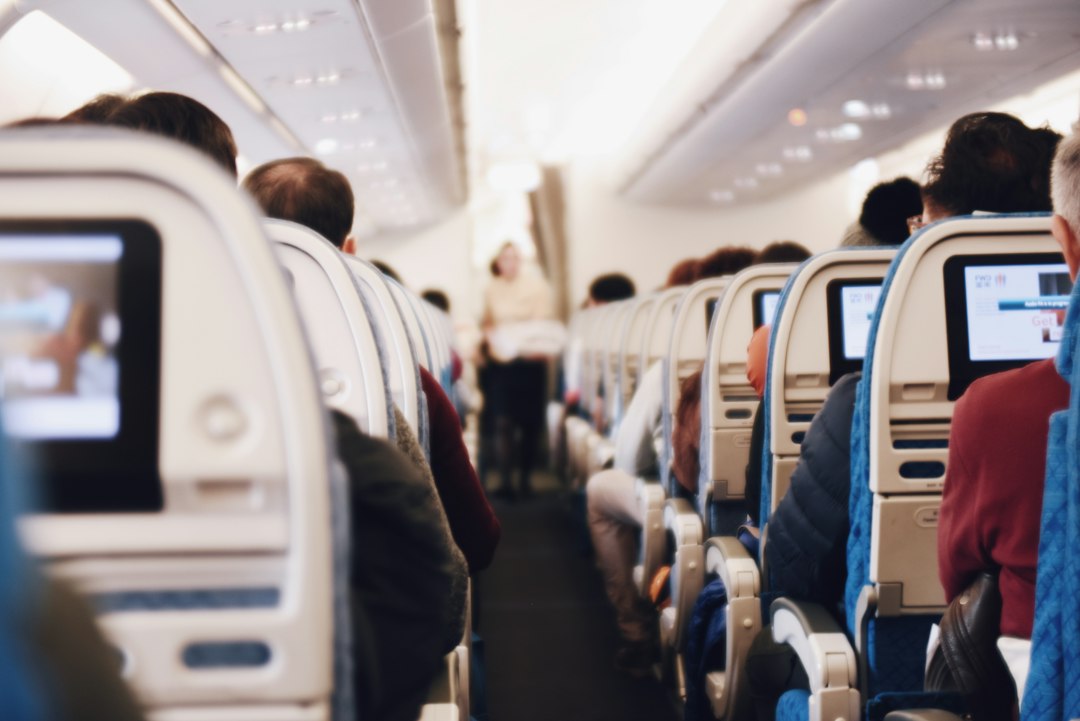
The Air Carrier Access Act grants DOT authority to set nondiscrimination standards for air travel. Under 14 C.F.R. 382.74, airlines may require handlers to provide documentation confirming three things: that the dog is trained to behave in public, that the dog is in good health, and that the handler takes responsibility for the dog's behavior during the flight.
The DOT form consolidates all three requirements into a single document. This is different from what housing law requires. The Fair Housing Act, enforced by HUD, governs Support Animals in housing and uses a completely separate documentation framework. The ACAA governs air travel exclusively, and its requirements apply regardless of what documentation you may already hold for housing purposes.
One common misconception among experienced handlers is that a support animal letter, a vest, or a training certificate satisfies airline requirements. Under current federal airline regulations, none of those documents substitute for the completed DOT form. Airlines that require it are acting within their legal rights, and refusing to complete it can result in your dog being denied cabin boarding.
If you want to understand how housing and airline rules intersect, our breakdown of Service Dog versus Support Animal protections covers each law's scope in plain terms.
Section-by-Section Breakdown
The DOT form has three distinct sections. Each requires specific information and a handler signature. Getting any section wrong is the most common reason airlines put a boarding request on hold.
Part One: Handler Information
This section asks for your legal name, contact information, and flight details. Use your name exactly as it appears on your government-issued ID. Any discrepancy between your form name and your boarding pass name can trigger a manual review.
List your departure airport, destination airport, and flight date. If you are flying with a connection, some airlines require a separate form for each operating carrier. A Delta flight that connects on a regional partner carrier may require two completed forms. Call the airline's accessibility desk to confirm before you travel.
Part Two: Behavior and Training Attestation
This is the most consequential section. You are swearing under penalty of federal false statement laws that your dog meets the behavioral standards described. The form asks you to confirm that your dog:
- Does not display aggressive behavior toward people or other animals
- Does not urinate or defecate in ways that cannot be controlled
- Has been trained to perform a task or function directly related to a disability
- Will not obstruct an aisle or emergency exit
Read each statement carefully. Do not rush this section. If your dog has ever shown reactive behavior in crowded environments, you need to honestly assess whether that behavior has been reliably resolved through training. Providing a false attestation is not just a problem with the airline. It exposes you to federal liability under 18 U.S.C. 1001, which covers false statements made to federal agencies and federally regulated entities.
For handlers who are still working through public access training with their dog, our guide on public access standards outlines the behavioral benchmarks your dog should meet before any air travel.
Part Three: Veterinary Health Form
Many airlines require this section to be completed by a licensed veterinarian, not by you. The vet confirms that your dog is current on core vaccinations and is healthy enough to fly. Some airlines accept this section as a handler attestation. Others require a veterinary signature dated within a specific window, often 12 months.
Check your airline's specific policy before your appointment. If your vet needs to sign, request the completed form at your next wellness visit and keep it on file. Do not wait until 48 hours before departure to schedule a vet visit for this purpose.
Common Mistakes That Cause Delays
In working with handlers across thousands of travel situations, our clinical team at TheraPetic® Healthcare Provider Group has seen the same errors appear repeatedly. These are the ones that most reliably cause boarding problems.
Submitting after the deadline. Most airlines require the form 48 hours before departure. Some require it earlier for international flights. Submitting at the gate is not an option. Airlines are not obligated to accept late submissions, and accessibility staff may not be available to process them in time.
Using an outdated form version. Airlines periodically update their required form. A form downloaded six months ago may no longer be accepted. Always download the form directly from the airline's official website within a week of travel.
Leaving fields blank. Any blank field creates grounds for rejection. If a field does not apply to your situation, write "N/A" rather than leaving it empty. Blank fields look like oversights, not deliberate omissions, and may trigger a request for resubmission.
Mismatched information. Your name, flight number, and travel date on the form must match your reservation exactly. Even small differences, like using a nickname or omitting a middle initial, can cause the form to be flagged for manual review.
Not keeping a copy. Email yourself a copy of the completed form before you submit it to the airline. If the airline claims it was not received or is asking for resubmission at check-in, you need to be able to produce it immediately.

When to Submit and to Whom
Most major U.S. carriers require submission at least 48 hours before departure. Some carriers, including those operating longer international routes, require submission even earlier. The 48-hour window is not a courtesy. It is a legally permissible requirement under DOT regulations.
Submit the form to the airline's designated accessibility or special assistance email address. This is not the same as the general customer service inbox. Find the specific accessibility contact on your airline's website, usually listed under "travelers with disabilities" or "accessibility services." Submitting to a general inbox risks the form not being routed correctly before your departure.
After submission, request a written confirmation. A confirmation email creates a record that the form was received. If you are denied boarding despite timely submission, that confirmation is your evidence for a DOT complaint filing.
If you are flying on a codeshare flight, identify the operating carrier. Your ticket may show one airline's name, but the operating carrier is the airline whose rules govern Service Dog documentation. Check your reservation confirmation carefully. The operating carrier is typically listed in smaller text near your flight number.
What Airlines Do With Your Form
Once submitted, the airline routes your form to its accessibility coordination team. That team reviews the form against its internal checklist, which tracks whether all sections are complete, whether the veterinary health attestation is current, and whether the behavioral declarations are consistent with what the form requires.
If the form passes review, a notation is added to your reservation. Gate agents can see that notation when they pull up your boarding pass. This is why submitting early matters. The notation needs to be in the system before you check in, especially if you are using an automated kiosk or mobile check-in.
If the form is flagged for any reason, the airline's accessibility team is supposed to contact you before departure to give you an opportunity to correct the problem. DOT regulations require airlines to make good-faith efforts to notify passengers rather than simply denying boarding without warning. If you are contacted, respond immediately and ask for the specific deficiency in writing so you can address it precisely.
Airlines are also required to retain copies of submitted forms for a period specified by DOT record-keeping rules. If you file a DOT complaint after a denied boarding, those records become part of the complaint investigation.
International Flights and Added Complexity
The DOT form governs flights that fall under U.S. jurisdiction. For international flights, additional destination-country requirements may apply. The United Kingdom, European Union member states, Australia, and several other jurisdictions have their own rules for Service Dogs entering the country, and those rules are entirely separate from U.S. ACAA compliance.
Some countries require health certificates, import permits, or quarantine periods for dogs entering from the United States. These are not airline documentation requirements. They are national border control requirements, and failing to meet them can result in your dog being held at the destination airport or returned to the U.S.
For international travel, contact the embassy or consulate of your destination country at least three months before departure. Requirements change, and the consequences of non-compliance are significant. Our Service Dog travel resource page covers both domestic and international planning considerations in more detail.
Getting Documentation Support Before You Fly
TheraPetic® Healthcare Provider Group is a 501(c)(3) nonprofit whose mission is to make disability accommodation accessible to every person who qualifies under federal law. Our Licensed Clinical Doctors work with handlers to ensure that documentation is thorough, legally sound, and ready for submission before any review process begins.
The DOT form is a handler attestation, but having clinical documentation that accurately reflects your disability and your dog's role can strengthen your overall accommodation profile, especially for handlers who face repeated challenges at airline accessibility desks.
If you are preparing for air travel and want to confirm your documentation is complete, start with our eligibility screening to connect with a Licensed Clinical Doctor from our team. You can also reach us directly at help@mypsd.org or by calling (800) 851-4390.
Traveling with a Service Dog is a protected right under federal law. Preparation is what turns that right into a smooth departure.
Written By
Ryan Gaughan, BA, CSDT #6202 , Executive Director
TheraPetic® Healthcare Provider Group • About • LinkedIn • ryanjgaughan.com
Clinically Reviewed By
Dr. Patrick Fisher, PhD, NCC , Founder & Clinical Director • The Service Animal Expert™
Editorial Review
This article was reviewed by Dr. Patrick Fisher, PhD, NCC on October 14, 2026 for accuracy, currency, and clarity. Content is updated when laws or guidance change.