

What the ADA Actually Says About Training
The Americans with Disabilities Act protects people with disabilities who use trained service animals in public places. That word "trained" carries enormous legal weight. Under the ADA as enforced today, a service animal must already be trained to perform a task directly related to a person's disability.
The law does not say one word about dogs that are still in training. That silence is not an accident or an oversight. It is a deliberate statutory gap that has real consequences for trainers, handlers and programs across the country.
Understanding that gap is the first step toward navigating it safely.
The Statutory Gap and Why It Matters
The ADA was signed into law decades ago and has been amended since, but neither the statute itself nor its implementing regulations extend federal public access rights to service animals in training. The core federal framework defines a service animal as a dog that "has been individually trained" to do work or perform tasks for a person with a disability. The past tense is intentional.
This creates a legal dead zone. A dog that is mid-training is not yet a "service animal" under federal law, even if it will be one in six months. The handler or trainer cannot invoke the ADA when a grocery store manager asks them to leave. There is no federal cause of action to rely on during that training window.
That is not a minor procedural hiccup. Training a service dog properly takes an average of one to two years. Public access exposure during training is not optional. It is a core part of the process. A dog that never practices in real-world environments cannot pass the behavioral standards required for full task training. The federal law essentially creates a requirement that cannot be met without access it refuses to guarantee.

DOJ Regulations and the Definition Problem
The Department of Justice issues and enforces the regulations that implement ADA Title II and Title III. The operative regulation, found at 28 C.F.R. Part 36 for public accommodations, defines "service animal" in a way that has been refined over time to exclude emotional support animals and to focus on task-trained dogs. That same regulatory language says nothing about training-phase dogs.
DOJ guidance documents have occasionally acknowledged the issue without resolving it. The Department has noted that some states protect service animals in training but has declined to extend federal protection itself. That position leaves the matter entirely to state legislatures.
It is worth understanding what the DOJ can and cannot do here. The Department can issue guidance and regulations interpreting the ADA, but it cannot add rights to the statute that Congress did not put there. Only Congress can close this gap at the federal level. Until that happens, trainers and handlers must look elsewhere.
How State Law Fills the Gap
Because the ADA is silent, state law governs access rights for service dogs in training. The variation between states is dramatic and sometimes confusing.
Many states have enacted statutes that explicitly extend public access rights to service animals in training. These laws typically grant the same or similar access rights that the ADA provides to trained service animals, but they apply during the training phase. Some states limit these rights to professional trainers or accredited programs. Others extend them to owner-trainers as well.
A number of states tie their training access protections to specific conditions. Some require the dog to wear a vest or identification harness during training outings. Others require the trainer to carry documentation from a recognized program. Some statutes are broad and permissive. Others are narrow and conditional.
A few states have no training access protections at all. In those states, a trainer working with a dog that is not yet task-trained has no legal right to bring that dog into a restaurant, retail store or other public accommodation. The business can legally refuse entry, and the trainer has no recourse under state or federal law.
As a 501(c)(3) nonprofit healthcare provider, TheraPetic® Healthcare Provider Group is committed to helping handlers and trainers understand both the legal framework and the clinical side of the service animal relationship. That mission is especially important when the law itself leaves people without clear answers.
Trainer Access Rights vs. Handler Access Rights
State statutes that do provide training access rights often draw a sharp distinction between professional trainers and individual owner-trainers. This distinction can determine whether a person has any legal protection at all.
Professional trainers working for an organization frequently have broader protections. Many state laws were written with those trainers in mind, picturing a credentialed professional from an accredited program working a dog through a structured curriculum. Those trainers may be explicitly named in the statute as authorized to access public accommodations with training dogs.
Owner-trainers are in a different position. Someone who is training their own service dog without formal organizational affiliation may or may not be covered by their state's training access statute. Some states use language like "a person who trains service animals for individuals with disabilities" which can be read broadly to include owner-trainers. Others reference program affiliation in ways that exclude self-trainers entirely.
The practical consequence is that two people walking dogs in identical training stages through the same store in the same state might have completely different legal rights based solely on their relationship to a formal training program. That is not an abstract distinction. It can mean the difference between a lawful business refusal and a statutory violation.
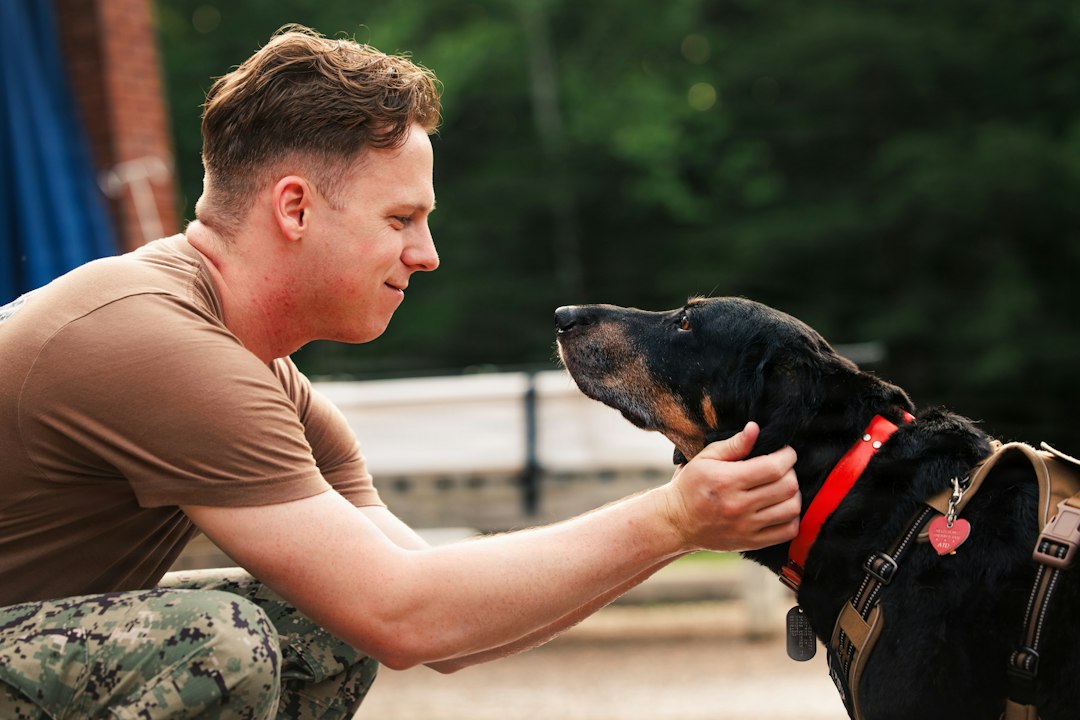
Real-World Public Access Conflicts
When a business refuses entry to a trainer and an in-training dog, the legal analysis turns entirely on state law. The handler cannot pull out the ADA as a shield. The relevant questions are whether the state has a training access statute, whether that statute covers this type of trainer, and whether the business's refusal violates it.
Businesses are frequently unaware of state-level training access laws even when they exist. Managers trained to comply with ADA service animal rules may not know their state goes further during training phases. That creates friction even in states where the trainer has clear legal rights.
When conflicts arise, the trainer's best tools are knowing the specific state statute by name and section number, having documentation of the dog's training program and status, and calmly citing the applicable state law to the manager or employee. Escalating to a confrontation rarely helps. Having the statutory citation ready usually does.
Some states also have complaint procedures or civil rights enforcement mechanisms that apply to violations of training access statutes. In those states, a business that wrongfully excludes a training dog and handler may face a complaint with a state civil rights agency or a civil lawsuit under state law. The remedies vary widely.
For handlers who want to understand how public access rules interact with documentation practices, our guide to service dog public access rights covers the ADA framework in full. Knowing both the federal floor and the state ceiling is essential for anyone working through the training phase.
Documentation and Proof During Training
The ADA's two-question rule does not apply to training-phase dogs because the ADA does not cover them. Under the ADA, a business may only ask two questions of a handler: whether the dog is a service animal required because of a disability, and what work or task the dog has been trained to perform. Businesses cannot ask for documentation, certification or ID cards for trained service animals.
That framework does not carry over to training-phase dogs. When state law governs access during training, state law also determines what documentation, if any, a business can require. Many state training access statutes allow or even require the trainer to present some form of documentation. That might be a letter from a training program, a training log, a program ID or proof of enrollment in an accredited curriculum.
Owner-trainers should keep detailed, dated training logs throughout the process. These logs serve multiple purposes. They document the dog's progress toward task competency. They demonstrate structured, goal-oriented training rather than casual pet outings. They also provide evidence if a state law complaint or civil action is ever needed.
Trainers affiliated with programs should carry program documentation during every public access outing. A simple letter on program letterhead identifying the dog as a service animal in training, the trainer's role and the program's contact information can resolve most business-level disputes before they escalate.
If you are navigating the screening process for a support animal or service dog evaluation, understanding how documentation works at each stage of training is part of making that process go smoothly.
What Handlers Should Do Right Now
The first step for any handler or trainer is identifying the specific statute in their state that addresses service animals in training. This is not optional research. It is foundational to knowing your rights before you walk through a door.
Look for your state's anti-discrimination statutes or civil rights code. Many states place their service animal provisions in a general anti-discrimination chapter or a specific disability rights chapter. Some states have a standalone service animal law. Search for the specific section that addresses training-phase animals and read the exact language. Pay attention to definitions of who qualifies as a trainer under that statute.
If your state does not have a training access statute, that is important information too. It means your public access options during training are limited to privately owned businesses that voluntarily allow training dogs, or to settings where you have prior authorization from the owner or operator.
Connect with established service dog training organizations in your state. These groups often track changes to state law, maintain relationships with frequently visited businesses and can provide documentation that helps during training outings. Their knowledge of local enforcement patterns is something no statute can provide on its own.
Understand the distinction between your current status and full ADA protection. Once your dog completes training and meets the ADA's definition of a service animal, the full weight of federal law applies. Businesses cannot legally ask you to leave. They cannot require documentation. They cannot inquire about your disability. That federal protection is the destination. State law is the road that gets you there.
For handlers exploring the intersection of mental health and service animals, our resource on psychiatric service dogs explains how task training for mental health disabilities is evaluated under both the ADA and state frameworks. The training gap issue is especially relevant for psychiatric service dog handlers because those dogs often require extensive real-world desensitization as part of their task training.
The ADA is one of the most powerful disability rights laws ever enacted. Its silence on training-phase dogs is a genuine limitation, not a flaw in enforcement. Closing that gap requires either federal legislative action or comprehensive state-level protections. Until that changes, handlers who know their state law and document their training process are far better positioned than those who assume federal protection covers every step of the journey.
TheraPetic® Healthcare Provider Group offers evaluations, documentation support and clinical guidance for individuals navigating service animal and support animal questions. Reach our clinical team at help@mypsd.org or by calling (800) 851-4390. You can also begin the process at go.mypsd.org.
Written By
Ryan Gaughan, BA, CSDT #6202 , Executive Director
TheraPetic® Healthcare Provider Group • About • LinkedIn • ryanjgaughan.com
Clinically Reviewed By
Dr. Patrick Fisher, PhD, NCC , Founder & Clinical Director • The Service Animal Expert™
Editorial Review
This article was reviewed by Dr. Patrick Fisher, PhD, NCC on October 7, 2026 for accuracy, currency, and clarity. Content is updated when laws or guidance change.