

What Is the DOT Service Animal Form
The DOT service dog form is an official document created under federal rulemaking by the U.S. Department of Transportation. Airlines operating in the United States are required to accept it as the standard request form for passengers traveling with a Service Dog.
The form has two versions. One covers the core handler and animal information. A second covers behavior and training attestation for flights lasting eight hours or more. Both must be completed accurately or your boarding access may be delayed or denied.
Many handlers assume this form is a formality. It is not. Airlines are permitted under current federal guidance to deny boarding to any Service Dog whose handler fails to submit a properly completed form. Getting every section right is not optional.
The ACAA Legal Basis for the Form
The Air Carrier Access Act grants passengers with disabilities the right to travel with trained Service Dogs in the aircraft cabin without extra charge. The DOT's final rule on traveling by air with Service Animals, which took effect in early 2021, restructured how airlines verify those animals.
Under the current rule, airlines may limit cabin animal access to trained Service Dogs only. Psychiatric Service Dogs and dogs trained for physical disabilities are both included under this protection. Emotional Support Animals, by contrast, are no longer required to be accommodated in the cabin under the ACAA rule as amended.
The rule gives airlines authority to require advance documentation. That documentation is the standardized DOT form. Airlines cannot invent their own forms and demand those instead. They must accept the DOT-issued version, though they may allow passengers to use an equivalent airline-branded form that captures the same required fields.
For a deeper look at how the ACAA interacts with other federal protections, see our guide on federal Service Dog laws.
Line-by-Line Guide to Filling It Out
The DOT form covers several distinct sections. Each one serves a specific legal purpose. Work through them in order and do not skip any field, even those that seem minor.
Section 1: Passenger Information
Enter your full legal name exactly as it appears on your government-issued ID. Your date of birth and contact phone number are also required. Discrepancies between this section and your boarding pass can trigger manual review by airline staff.
Section 2: Disability Information
You are not required to name your specific diagnosis. You are required to confirm that you have a disability as defined under federal law. The form asks you to attest that your Service Dog is trained to perform work or tasks directly related to your disability. Write clearly and do not leave this section blank.
If you have a Psychiatric Service Dog, you may simply attest that the dog is trained to perform specific tasks related to a psychiatric disability. You do not need to disclose your diagnosis to the airline under the ACAA. Our team at TheraPetic® Healthcare Provider Group, a 501(c)(3) nonprofit, works with handlers every day who are unsure what to disclose. The short answer is: confirm the disability category, not the diagnosis name.
Section 3: Service Dog Information
Enter your dog's name, breed and approximate weight. The breed field matters because some airlines maintain breed restriction policies for certain aircraft types. If your dog's breed triggers a flag, the airline must still evaluate the dog as a trained Service Dog under the ACAA. Breed alone is not a legal basis for denial under the federal rule, but it can cause additional review time.
Include your dog's approximate age. Airlines use this to assess whether a dog is mature enough for task performance. A puppy in training is not a Service Dog under the ACAA rule and would not qualify for cabin access under this form.
Section 4: Training Attestation
This is the most legally significant section of the form. You must attest that your dog has been individually trained to perform work or tasks for your disability. The form does not require proof of certification or a specific training program. Under current federal law, owner-training is a valid method of Service Dog preparation.
You must also attest that your dog is trained to behave in a public setting. This means the dog will not lunge at other passengers, bark continuously, eliminate in the cabin without warning or display aggression. Be honest here. If your dog has known behavioral issues in crowded environments, the form requires an accurate representation.
Section 5: Veterinary Health Attestation
You are required to confirm that your Service Dog has received core vaccinations appropriate to its age and current health status. Many handlers confuse this with a requirement to submit veterinary records. The form itself does not require you to attach records. It requires your signed attestation that the dog is current on vaccinations.
Some airlines will separately request health records. That is an airline-level policy, not a DOT requirement. Know the difference before you contact the airline's accessibility desk.
Common Mistakes That Cause Delays or Denials
In our experience supporting handlers through the air travel documentation process, the same errors appear repeatedly. Knowing these ahead of time can save you a stressful morning at the gate.
Mistake 1: Submitting the form too close to departure. Most airlines require the form at least 48 hours before the flight. Some require 72 hours for international routes. Submitting the night before is one of the top reasons handlers are flagged for review on travel day.
Mistake 2: Leaving the behavior attestation blank on long flights. Flights of eight hours or more require a second DOT form covering relief behavior and sanitation. Handlers often complete the primary form and miss the second. If your flight crosses that threshold, both forms are mandatory.
Mistake 3: Name mismatches. If the name on your form does not exactly match your boarding pass, airline systems may not link the two records. Always use your full legal name with no abbreviations.
Mistake 4: Describing the dog's tasks too vaguely. Saying your dog "provides comfort" is not a task description. Tasks are specific, trained behaviors such as "alerts to the onset of a panic attack by applying deep pressure" or "retrieves dropped objects due to mobility impairment." Vague language draws scrutiny. Specific language moves through review faster.
Mistake 5: Using an outdated version of the form. The DOT updates its guidance documents. Always download the form directly from the DOT's official website at transportation.gov or from the airline's accessibility page. Using a form saved from an old email thread can result in rejection.
Mistake 6: Not keeping a copy. Bring a printed copy and a digital copy. Gate agents sometimes cannot access submitted documentation in their system. Having it on hand prevents delays.
When to Submit the Form
Timing your submission correctly is as important as completing the form accurately. Federal rules permit airlines to require advance submission. Most major U.S. carriers have set that window at 48 hours before departure.
Submit as early as possible after booking. If you book six weeks out, submit the form within 24 hours of booking. This gives the airline's accessibility team time to process and confirm, and it gives you time to correct any issues before they become gate-day emergencies.
For connecting flights, each airline operating a leg of your journey may require its own form submission. If you are flying on a codeshare itinerary operated by two different carriers, contact both accessibility desks separately. Submitting to one carrier does not automatically transfer to another.
After submitting, request written confirmation. A confirmation email creates a record. If there is a dispute at the gate, that email is your evidence.
Handlers preparing for travel should also review their dog's task training documentation before departure. Clear task records help if an airline agent asks follow-up questions.
What Airlines Do With Your Form
Understanding what happens after you submit helps you anticipate next steps and respond to any airline follow-up correctly.
After submission, the form goes to the airline's accessibility services team. That team reviews it for completeness. They verify that all required fields are filled, that the training attestation is present, and that the veterinary health section is signed. They are not verifying your dog's credentials against a registry. There is no federal Service Dog registry and no airline is permitted to require one.
Once approved, the airline links the approval to your reservation. Gate agents see a notation on your boarding record indicating a Service Dog is approved for travel. If that notation is missing on travel day, it is almost always because the submission was not linked correctly. That is why keeping your confirmation email matters.
Airlines may follow up by phone or email to ask clarifying questions. They cannot demand documentation beyond the completed DOT form. If an airline asks for a letter from a Licensed Clinical Doctor or a certification certificate as a condition of boarding, that is outside the scope of what the ACAA rule permits them to require.
If an airline denies your request after reviewing the form, they must document the basis for denial. You have the right to request that documentation in writing. It is the foundation of any complaint you would file with the DOT.
The Behavior Attestation Section Explained
The behavior attestation portion of the DOT form causes more confusion than any other section. Let's break it down clearly.
You are attesting that your dog will not pose a direct threat to the health or safety of others. This is the legal standard derived from the broader federal disability rights framework. A dog that poses a direct threat based on actual behavior, not breed or appearance, can be excluded from the cabin.
The form asks you to confirm the dog is housebroken. For long flights, the eight-hour form asks how the dog will manage its need to eliminate. You must be able to honestly state that your dog can go an extended period without eliminating, or that you have a plan such as a relief break during a layover. Do not attest to housetraining if your dog is not reliably trained. An in-cabin elimination incident creates grounds for denial on future flights.
The form also asks you to attest that the dog will fit within your foot space without extending into aisles or adjacent seats. Measure your dog against typical aircraft floor dimensions before travel. Larger breeds may require bulkhead seating, which you can request at the same time you submit your form.
Handlers with Psychiatric Service Dogs often ask whether task training must be disclosed in the behavior section. It does not. The behavior section covers conduct, not diagnosis or task type. You are confirming the dog will behave appropriately. Task disclosure happens in the training attestation section covered earlier.
For handlers who need support navigating documentation requirements for a Psychiatric Service Dog specifically, our Psychiatric Service Dog resource page covers the full landscape of current federal protections.
Final Tips for a Smooth Travel Day
Arrive at the airport with extra time. Even with a confirmed approval on file, some gate agents are unfamiliar with the current DOT rule. Having physical copies of your submitted form and confirmation email allows you to resolve misunderstandings quickly without missing your flight.
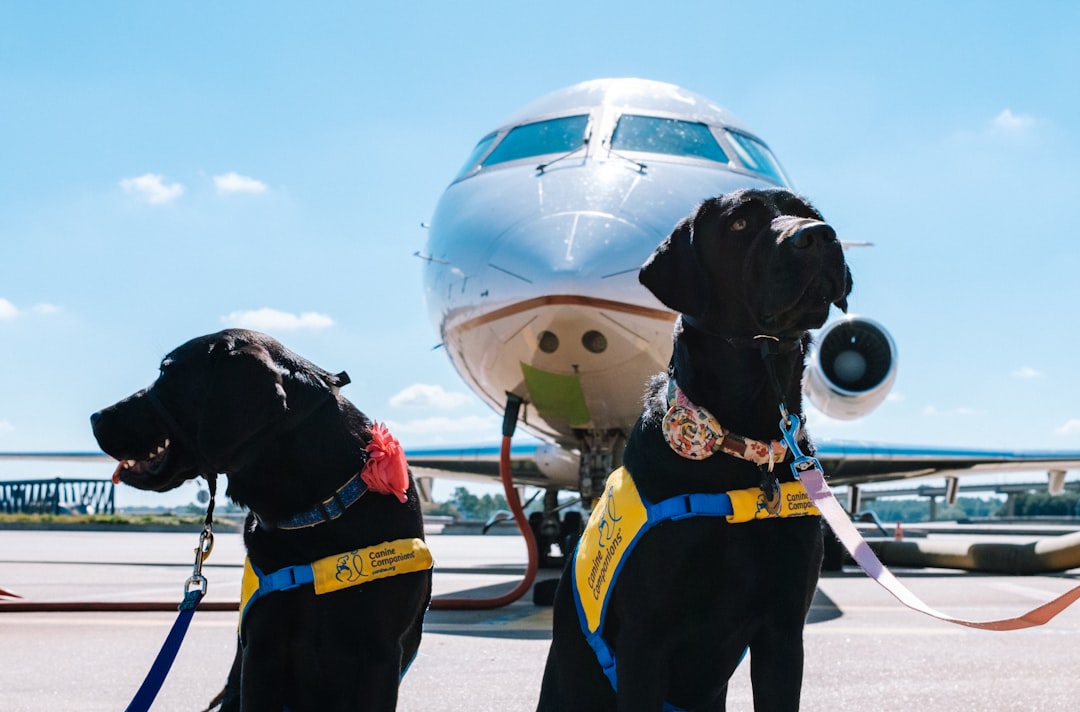
Wear your dog's working gear. A vest or harness does not legally establish Service Dog status, but it signals to airline and airport staff that the dog is working. Practical signaling reduces the number of questions you will face before reaching the gate.
Know your escalation path. If a gate agent or airline supervisor incorrectly denies your dog access to the cabin after a properly submitted and confirmed form, ask for the airline's Complaints Resolution Official. Under the ACAA, airlines are required to designate a Complaints Resolution Official who must be available in person at the airport. That official has authority to override gate-level decisions.
If the situation is not resolved at the airport, file a complaint with the DOT's Aviation Consumer Protection Division. Keep your flight details, the name of any airline staff involved and all written communications you received from the airline. Document everything in real time.
TheraPetic® Healthcare Provider Group supports handlers through this process as part of our nonprofit mission to expand access to trained support animal documentation and education. If you need help understanding your rights before travel or need to connect with a Licensed Clinical Doctor for a thorough clinical assessment, contact our team at help@mypsd.org or call (800) 851-4390.
You can also start the process online through our Service Dog screening tool, which helps determine whether your dog qualifies under current federal guidelines and what documentation may support your travel needs.
Written By
Ryan Gaughan, BA, CSDT #6202 — Executive Director
TheraPetic® Healthcare Provider Group • About • LinkedIn • ryanjgaughan.com
Clinically Reviewed By
Dr. Patrick Fisher, PhD, NCC — Founder & Clinical Director • The Service Animal Expert™
Editorial Review
This article was reviewed by Dr. Patrick Fisher, PhD, NCC on August 11, 2026 for accuracy, currency, and clarity. Content is updated when laws or guidance change.