

Two Titles, One Law. But Not the Same Rules
The Americans with Disabilities Act is federal law. Most handlers know that. What fewer handlers realize is that the ADA is divided into separate titles, and each title operates differently. Title II and Title III both protect service dog handlers. But who they cover, how they are enforced, and what remedies are available differ in ways that matter enormously in a real-world access dispute.
If you have ever been turned away from a government office and then from a restaurant on the same day, you were denied access under two separate legal frameworks. Knowing which title applies changes how you respond, who you report to, and what outcome you can realistically expect.
This guide is written for handlers who already understand the basics and want to go deeper into the statutory architecture of ADA access rights for service dogs.
Who Title II Covers: Public Entities Defined
Title II of the ADA applies to public entities. Under 42 U.S.C. § 12131, a public entity is defined as any state or local government, any department or agency of a state or local government, and certain commuter authorities. Federal agencies are not covered by Title II. They are instead governed by Section 504 of the Rehabilitation Act, which predates the ADA and carries similar obligations.
In practice, Title II covers an enormous range of facilities and programs. Public schools, state universities, courthouses, city halls, public libraries, transit systems, parks departments, motor vehicle offices, and public hospitals all fall under Title II. If the entity receives its authority from a government body and serves the general public in a governmental capacity, Title II almost certainly applies.
The regulation implementing Title II for service animals is found at 28 C.F.R. Part 35. The Department of Justice is the primary federal agency responsible for enforcing Title II, though individual federal agencies also have enforcement roles when they fund state and local programs.
Who Title III Covers: Private Businesses and Public Accommodations
Title III applies to private entities that own, operate, lease, or lease to places of public accommodation. The statutory list at 42 U.S.C. § 12181 includes twelve categories. Hotels, restaurants, theaters, retail stores, service establishments, transportation terminals, museums, parks, schools, social service centers, and places of exercise or recreation are all listed.
The breadth of Title III surprises many handlers. A privately owned shopping mall is a place of public accommodation. So is a privately operated gym, a doctor's office, a law firm that serves clients, and a hotel. Even a private school that is not operated by a religious organization is covered. Religious organizations are explicitly exempted from Title III under 42 U.S.C. § 12187.
The regulation implementing Title III for service animals is found at 28 C.F.R. Part 36. The Department of Justice also enforces Title III, but the mechanism differs significantly from Title II enforcement.

Service Dog Rules Side by Side
Both Title II and Title III define a service animal as a dog that is individually trained to do work or perform tasks for a person with a disability. Miniature horses are also recognized under both titles as an additional option in certain circumstances. Emotional support animals, comfort animals, and therapy dogs do not qualify as service animals under either title and are not granted ADA access rights.
At TheraPetic® Healthcare Provider Group, our Licensed Clinical Doctors regularly work with clients who confuse ADA protections for service dogs with the housing protections available under the Fair Housing Act for support animals. These are separate legal frameworks with different standards. Our nonprofit mission is to make sure every handler understands exactly which law protects them and in what setting.
The core access standard is the same under both titles. A service dog must be permitted to accompany its handler anywhere the public is allowed to go. Exclusions are only permitted in narrow circumstances: if the dog is out of control and the handler does not take effective action to control it, or if the dog is not housebroken.
Where the two titles begin to diverge is in what covered entities are actually required to do beyond basic access. Title II imposes broader programmatic obligations. A public entity must ensure that its entire program of services is accessible to people with disabilities, not just its physical spaces. Title III focuses more narrowly on the physical place of public accommodation and the specific goods or services offered there.
The Two-Question Rule Under Both Titles
Staff at both Title II and Title III entities are permitted to ask only two questions when it is not obvious that a dog is a service animal. Those questions are: Is this a service animal required because of a disability? What work or task has the dog been trained to perform?
Staff cannot ask about the nature or extent of the person's disability. They cannot require documentation, identification cards, or demonstration of the task. They cannot demand that the dog wear a vest or patch. These restrictions apply equally to a city clerk's office and to a hotel front desk.
The two-question standard comes from 28 C.F.R. § 35.136 (Title II) and 28 C.F.R. § 36.302 (Title III). Both provisions use nearly identical language, which reflects a deliberate congressional and regulatory intent to create a consistent baseline for handlers across all covered settings.
Understanding the task description requirement matters at a practical level. A handler should be prepared to describe the specific task their dog performs in plain terms. "He alerts me to oncoming seizures" or "She retrieves dropped items because I use a wheelchair" are sufficient. Vague answers like "he helps with my anxiety" without identifying a trained task will not satisfy the standard and may lead to a lawful exclusion.
For handlers navigating the documentation landscape, our screening process can help clarify what a proper service dog assessment looks like and why federal law deliberately keeps documentation out of the access equation.
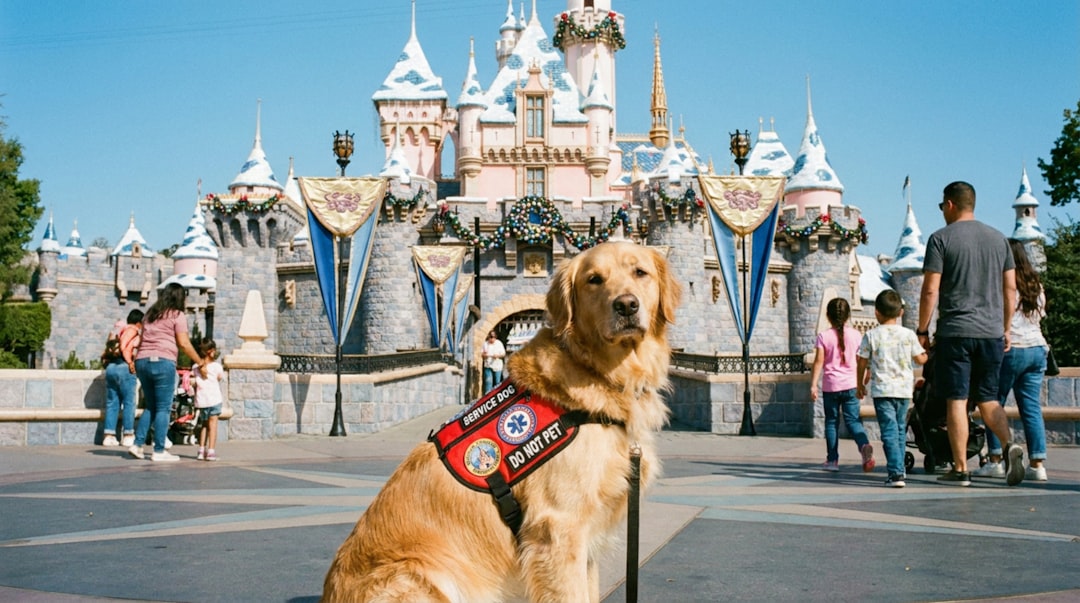
Enforcing Your Rights Under Title II
Title II enforcement has two primary pathways. A handler can file an administrative complaint with a federal agency, or file a private lawsuit in federal court. Both options are available, and they are not mutually exclusive.
Administrative complaints under Title II are filed with the Department of Justice Civil Rights Division. Complaints must generally be filed within 180 days of the alleged discrimination. The DOJ has the authority to investigate, mediate, and, if necessary, file suit against the public entity. The DOJ can seek injunctive relief and civil penalties in these cases.
Critically, Title II also allows handlers to pursue claims under Section 504 of the Rehabilitation Act if the public entity receives federal financial assistance. Most state and local government programs do receive some federal funding, which means Section 504 often runs parallel to Title II. Section 504 has been interpreted by courts to permit compensatory damages, which Title II alone may not always provide depending on the circuit.
Private lawsuits under Title II can seek injunctive relief and attorney's fees. The availability of compensatory damages in a private Title II action has been the subject of significant litigation. The Supreme Court addressed the intersection of Title II and sovereign immunity in its ruling in Tennessee v. Lane, though handlers should consult with a disability rights attorney about the current state of the law in their specific circuit.
State laws may also provide additional protections and remedies. Several states have enacted their own disability civil rights statutes that go beyond the ADA. California's Unruh Civil Rights Act, for example, allows for statutory damages even for ADA violations that would not otherwise trigger compensatory damages in federal court.
Enforcing Your Rights Under Title III
Title III enforcement works differently. The Department of Justice can bring civil actions against private businesses, and the Attorney General can seek monetary damages for aggrieved individuals and civil penalties ranging from $75,000 for a first violation to $150,000 for subsequent violations under 42 U.S.C. § 12188.
Private plaintiffs can also sue under Title III. The remedy available to a private plaintiff, though, is limited to injunctive relief only. Compensatory damages are not available to an individual suing a private business under Title III alone. Attorney's fees are available if the plaintiff prevails.
This is a significant structural difference from Title II. A handler who is denied access to a government building may have a path to monetary compensation through the combination of Title II and Section 504. A handler denied access to a retail store is generally limited to injunctive relief in a private suit. Meaning a court order requiring the business to comply going forward.
Many handlers pursue Title III claims through organizations like the National Federation of the Blind or the Disability Rights Advocates, which bring systemic cases aimed at changing business practices rather than recovering individual damages. Pattern or practice cases brought by the DOJ under Title III have resulted in consent decrees with major hotel chains, grocery retailers, and transportation companies.
To learn more about how federal law distinguishes between different types of assistance animals across settings, our comparison of service dogs and support animals walks through the legal distinctions in detail.
Where Handlers Get Tripped Up
The most common mistake experienced handlers make is assuming that all covered entities operate under identical obligations. They do not. The programmatic access requirements under Title II mean that a public transit authority, for example, must affirmatively modify its policies to ensure that a service dog team can use all parts of the system. Not just the parts that are architecturally accessible.
Title III entities have a different standard: reasonable modifications to policies, practices, and procedures. A private business must make reasonable modifications unless doing so would fundamentally alter the nature of the goods or services being provided. The "fundamental alteration" defense is narrower than it sounds, and courts have consistently rejected it when applied to service dog access.
Handlers also sometimes confuse Title III coverage with Federal Transit Administration regulations, which govern federally funded transit. A privately operated shuttle service at an airport may be covered under a combination of Title III and DOT regulations, not Title II. Getting the right statute matters before filing a complaint.
Another common confusion involves housing. A landlord is not covered by Title III as a place of public accommodation in the traditional sense. Residential housing falls under the Fair Housing Act. A landlord's sales office might be covered by Title III, but the leasing of apartments is governed by the FHA. Support animals, which do have FHA protection even though they are not ADA service animals, are often brought into ADA conversations where they simply do not apply. Our guide on support animal housing rights under the Fair Housing Act covers that separate framework in full.
For handlers whose service dog also provides emotional support as a secondary benefit, it is worth understanding that the ADA cares only about trained task work, not the emotional or psychological benefit a dog's presence may provide. The task must be discrete, trained, and directly linked to the disability.
What to Do If Access Is Denied
When access is denied, the first step is to calmly and clearly state the legal basis for your right to be accompanied by your service dog. Naming the specific title, Title II for a government building, Title III for a private business, signals to the staff member that you know the law and are prepared to pursue a formal remedy.
Document everything. Note the date, time, location, name of the staff member if possible, and the exact reason given for the denial. Written records are the foundation of any administrative complaint or lawsuit. If possible, follow up the incident in writing to the facility's management so there is a paper trail.
For Title II violations, file a complaint with the DOJ Civil Rights Division through the ADA portal at ada.gov. For Title III violations, the same DOJ portal accepts complaints, or you can contact a private disability rights attorney to evaluate whether a private action is warranted. Many disability rights organizations offer free intake consultations.
State human rights agencies are another resource. Many states have their own enforcement bodies that can investigate discrimination complaints independently of the federal process, and state remedies sometimes include damages that federal Title III claims do not.
TheraPetic® Healthcare Provider Group operates as a 501(c)(3) nonprofit because we believe that every person who relies on a service dog or support animal deserves access to clear, accurate information about their rights. Not just at the point of documentation, but throughout their daily life. If you have questions about your situation or want to speak with someone on our clinical team, you can reach us at help@mypsd.org or call (800) 851-4390. You can also begin a confidential screening at any time.
Understanding the difference between Title II and Title III is not just academic. It determines where you file, what remedy you can recover, and how much leverage you have when a covered entity fails to follow the law.
Written By
Ryan Gaughan, BA, CSDT #6202 — Executive Director
TheraPetic® Healthcare Provider Group • About • LinkedIn • ryanjgaughan.com
Clinically Reviewed By
Dr. Patrick Fisher, PhD, NCC — Founder & Clinical Director • The Service Animal Expert™
Editorial Review
This article was reviewed by Dr. Patrick Fisher, PhD, NCC on August 21, 2026 for accuracy, currency, and clarity. Content is updated when laws or guidance change.